
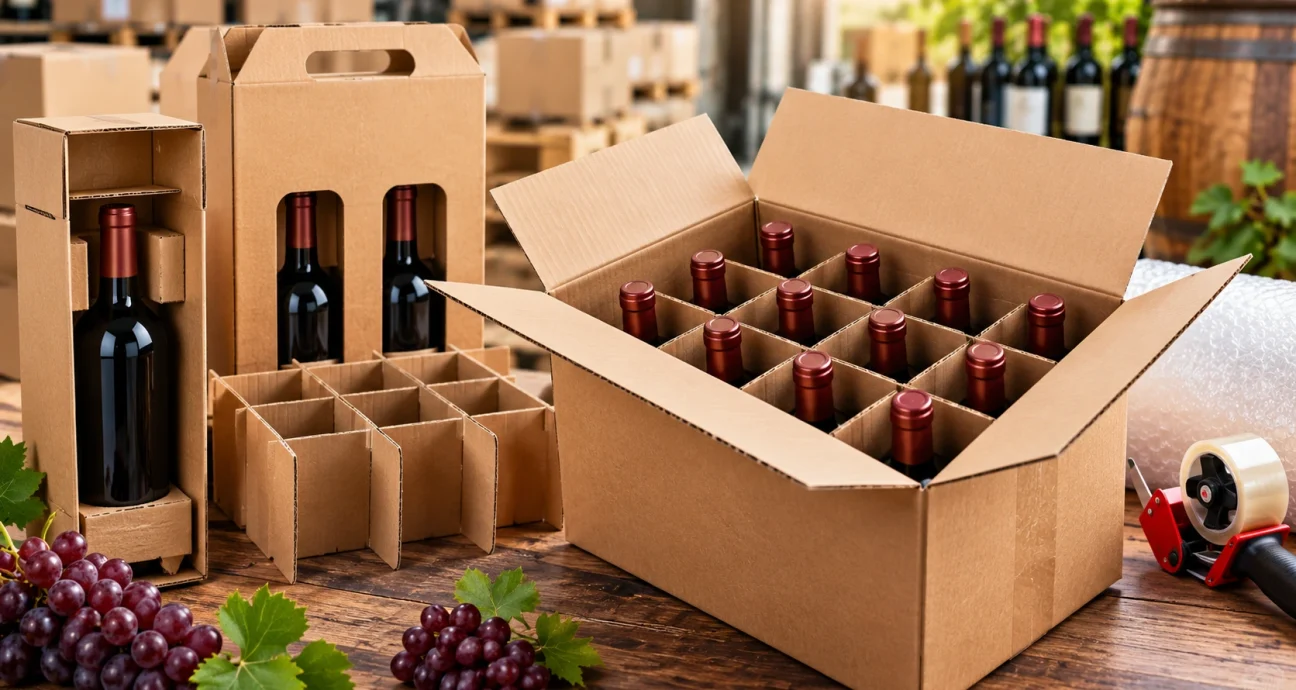
Wine bottles require careful packaging to protect them during storage, handling and transportation. Unlike many ordinary products, wine bottles are fragile, relatively heavy and vulnerable to impact. A suitable packaging solution must therefore provide adequate cushioning, prevent excessive movement and withstand the conditions encountered throughout the distribution process.
For wineries, wine distributors, beverage importers, retailers and hospitality businesses, choosing the right corrugated box for wine bottles is an important part of protecting products and managing shipping costs.
Corrugated packaging is widely used for bottle transportation because it combines a relatively lightweight structure with customizable dimensions, protective inserts and different board-strength options.
However, not every corrugated carton is suitable for wine bottles. The correct design depends on the number of bottles, bottle dimensions, glass weight, transportation method and the level of protection required.
This guide explains how to choose wine bottle corrugated boxes, which materials and inserts to consider, how to improve shipping protection and what Malaysian businesses should look for when sourcing custom wine packaging.
What Is a Corrugated Box for Wine Bottles?
A corrugated wine box is a paper-based packaging container designed to hold and protect one or more wine bottles.
It is manufactured from corrugated fibreboard, which typically consists of flat liner sheets bonded to a fluted paper layer.
The fluted structure provides stiffness and helps the board resist compression. When combined with a suitable box design and protective inserts, corrugated packaging can help reduce the risk of bottle movement and damage during transportation.
Corrugated wine packaging may include:
- Single-bottle cartons
- Two-bottle gift boxes
- Three-bottle cartons
- Six-bottle wine boxes
- Twelve-bottle shipping cartons
- Multi-bottle cartons with internal dividers
- Custom-printed wine packaging
- Heavy-duty export packaging
Each format serves a different purpose. A presentation box intended for a retail gift may have different design priorities from a shipping carton intended to transport twelve glass bottles over long distances.
Why Is Special Packaging Important for Wine Bottles?
Wine bottles are commonly made from glass, making them vulnerable to impact and concentrated pressure.
Even when a carton appears strong, bottles can still break if they collide with one another or strike the sides of the box.
A well-designed wine packaging system should address several risks.
1. Impact Protection
Bottles may experience shocks during loading, unloading, sorting and transportation.
Protective inserts help separate the bottles from one another and reduce direct contact with the outer carton.
Depending on the application, additional cushioning may be needed to absorb impact.
2. Bottle Separation
When several bottles are packed together, internal dividers help prevent them from knocking against one another.
This is particularly important for multi-bottle cartons used by wine distributors, wholesalers and retailers.
3. Compression Resistance
Wine bottles are relatively heavy, especially when several bottles are packed into one carton.
The box must withstand its own contents and any stacking loads imposed during storage or transportation.
The appropriate board specification depends on the gross carton weight, dimensions and stacking conditions.
4. Transportation Efficiency
Corrugated wine boxes can be designed to fit the bottle dimensions and shipping configuration.
A suitable design can help reduce unnecessary empty space, improve pallet utilisation and simplify handling.
5. Product Presentation
For premium wine products, packaging also contributes to the customer’s experience.
Custom printing, clean finishes, dividers and presentation features can help create a more professional appearance for gift sets and retail packaging.
What Is the Best Corrugated Box for Wine Bottles?
There is no single best corrugated box for every wine bottle.
The right packaging depends on whether the box is intended for retail presentation, local delivery, wholesale distribution or export shipping.
The following table provides a starting point.
| Application | Packaging option to consider | Main consideration |
|---|---|---|
| Single-bottle delivery | Individual corrugated carton with cushioning | Preventing bottle movement |
| Two-bottle gift set | Custom-printed box with separate compartments | Presentation and separation |
| Three-bottle packaging | Corrugated carton with dividers | Bottle-to-bottle contact |
| Six-bottle shipping | Corrugated carton with individual cells | Combined weight and impact protection |
| Twelve-bottle wholesale carton | Appropriately specified corrugated carton with dividers | Compression and stacking |
| Premium wine gift packaging | Custom carton with fitted insert | Appearance and protection |
| Long-distance shipping | Tested carton and suitable internal protection | Handling, vibration and impact |
| Export distribution | Packaging designed for the full shipping environment | Compression, moisture and transport risks |
These are general recommendations, not guaranteed specifications. The finished package should be evaluated against the actual bottle dimensions, weight and distribution conditions.
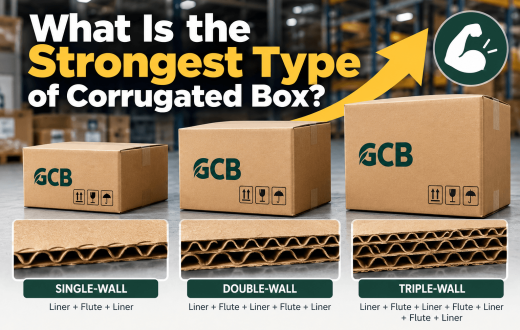
Single-Wall vs Double-Wall Corrugated Wine Boxes
One of the most important decisions when selecting a corrugated wine carton is the board construction.
Single-Wall Corrugated Boxes
Single-wall corrugated board contains one fluted layer between two liner sheets.
It may be suitable for certain lighter-duty applications, including individual bottles, selected retail cartons and local distribution where the packaging requirements are well understood.
The performance depends on the paper grades, flute profile, box dimensions and design.
Double-Wall Corrugated Boxes
Double-wall corrugated board contains two fluted layers separated by a liner.
This construction is often considered for heavier cartons, multiple-bottle shipments and applications that require greater structural performance.
For example, a carton containing six or twelve full wine bottles has a substantially different weight requirement from a small single-bottle gift box.
Double-wall construction may be appropriate for some of these applications, but the final specification should be selected according to the actual load and shipping conditions.
Which Should You Choose?
Consider the following factors before deciding:
- Total weight of the packed carton
- Number and dimensions of bottles
- Box size
- Number of cartons stacked together
- Transportation distance
- Expected handling conditions
- Required cushioning
- Storage humidity
The thickest board is not automatically the most cost-effective solution. The objective is to achieve sufficient protection without using unnecessary packaging material.
Why Wine Bottle Dividers Matter
For cartons containing multiple bottles, internal dividers are often an important part of the packaging design.
Dividers create separate compartments and help prevent bottles from colliding during handling and transportation.
Common divider configurations include:
Cross Dividers
Cross dividers form a grid of individual compartments.
They are useful for separating bottles in multi-bottle cartons and reducing direct glass-to-glass contact.
Full-Height Dividers
Full-height dividers extend through most or all of the usable carton height.
Depending on the design, they can help maintain separation between bottles and improve internal organisation.
Custom-Fitted Inserts
Custom inserts are designed around the shape and dimensions of the bottle.
They may be appropriate for premium wine products, gift sets or bottles with unusual shapes.
Cushioning Inserts
Additional cushioning can be used where the bottle and distribution environment require more impact protection.
The best insert depends on the bottle dimensions, weight, packaging orientation and shipping conditions.
Important: Dividers help separate bottles, but they do not automatically provide sufficient cushioning against every type of impact. The complete package should be tested when breakage risk is significant.
How to Design a Corrugated Box for Wine Bottles
A good wine packaging design begins with the product rather than the carton.
Before choosing the board specification, businesses should identify the bottle dimensions, number of bottles and intended distribution method.
Step 1: Measure the Bottle
Record the bottle’s:
- Height
- Maximum diameter
- Base diameter
- Neck dimensions
- Weight when filled
Bottle dimensions vary by style. A standard-shaped bottle may fit a carton that is unsuitable for a wider or taller bottle.
Step 2: Decide How Many Bottles to Pack
Determine whether the carton will contain one, two, three, six, twelve or another number of bottles.
The number of bottles affects the internal layout, gross weight and carton dimensions.
Step 3: Choose the Internal Layout
Determine whether bottles will be arranged vertically, horizontally or in another orientation appropriate to the product.
The layout must provide adequate clearance and prevent unwanted movement.
The bottle closure, neck and body should all be considered when designing the compartments.
Step 4: Select the Corrugated Board
Choose a suitable board construction based on the gross carton weight, stacking requirements and transportation environment.
Single-wall and double-wall constructions may both be suitable for different wine packaging applications.
The paper grade and flute profile should be considered alongside the number of layers.
Step 5: Design the Dividers and Cushioning
Internal dividers should keep bottles separated and positioned correctly.
Additional cushioning may be necessary if the carton will be exposed to significant impact or vibration.
Step 6: Consider Printing and Branding
Determine whether the carton needs a company logo, product information, handling instructions or custom graphics.
Printing should not compromise required box performance.
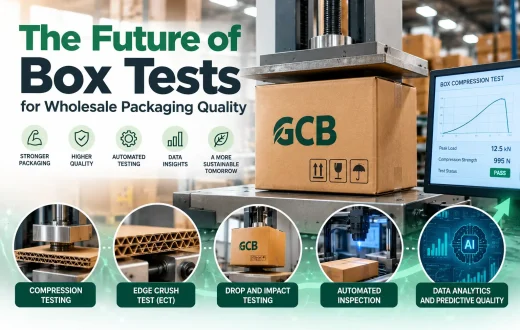
Step 7: Test the Complete Package
Where product damage would be costly, test the complete packaging system rather than relying on board specifications alone.
Testing may include compression, drop, vibration or other distribution-related assessments, depending on the risks involved.
Custom-Printed Corrugated Wine Boxes
Custom printing can make wine packaging more recognisable and professional.
For wineries, distributors and gift retailers, printed corrugated cartons can communicate brand identity while providing practical protection.
Common customisation options include:
- Company logos
- Brand colours
- Product names
- Bottle descriptions
- Gift messaging
- Handling symbols
- Product identification
- Shipping information
For wholesale packaging, the print design should be planned alongside the carton structure.
For example, a carton designed for retail presentation may prioritise appearance, while a shipping carton may prioritise structural performance and clear handling information.
The appropriate printing method depends on the artwork, quantity, board surface and production requirements.
Corrugated Wine Packaging for Wholesale Distribution
Wine distributors and wholesalers often need packaging that can accommodate repeated orders and consistent handling requirements.
A suitable wholesale wine carton should provide reliable bottle separation, appropriate compression performance and practical storage dimensions.
Consistent Carton Specifications
Repeat orders are easier to manage when the packaging specification is documented.
This can include the carton dimensions, board construction, divider design, printing and required quality checks.
Efficient Storage
Corrugated cartons are commonly supplied flat before assembly.
This can help businesses manage storage space compared with storing fully assembled empty boxes.
The actual space savings depend on the box design and warehouse arrangements.
Palletisation
Wholesale wine cartons may be arranged on pallets for storage and transportation.
Box dimensions should be considered alongside the pallet layout, carton orientation and stacking height.
A well-planned configuration can help improve space utilisation and reduce handling difficulties.
Quality Control
For bulk orders, dimensional consistency and reliable manufacturing are important.
Depending on the application, buyers may request relevant test results or agreed quality checks before approving a large production run.
Corrugated Wine Boxes for E-Commerce and Direct Delivery
Online wine sales and direct delivery create different packaging challenges from conventional retail distribution.
Packages may pass through several handling stages and may not always be transported in carefully controlled conditions.
For e-commerce shipments, businesses should pay particular attention to:
- Bottle separation
- Impact protection
- Closure security
- Carton strength
- Shipping dimensions
- Labelling
- Carrier requirements
A carton designed for warehouse palletisation may not automatically be suitable for individual parcel delivery.
For fragile shipments, the complete packaging system should be assessed under conditions that reflect the intended distribution route.
Businesses should also check the carrier’s current requirements for shipping glass bottles and alcoholic beverages, including any applicable restrictions.
Corrugated Wine Packaging for Export
Exporting wine or transporting wine products over long distances can introduce additional packaging challenges.
Cartons may be exposed to repeated handling, stacking pressure, vibration and changes in temperature or humidity.
The required protection depends on the transport method and route.
Sea Freight
Sea freight shipments may involve long transit times, container loading and unloading, and humid conditions.
Packaging specifications should account for expected stacking loads and the possibility of moisture exposure.
Air Freight
Air freight may require attention to parcel or cargo handling, dimensional efficiency and the carrier’s packaging requirements.
Road Transportation
Road transport can expose cartons to vibration, braking forces and handling during transfers.
Choosing the Right Export Carton
Businesses should consider the complete shipping environment when choosing export wine packaging.
For higher-risk shipments, suitable testing can help assess whether the box and internal inserts provide adequate protection.
A corrugated carton should not be assumed to protect wine against every environmental condition. Temperature-sensitive products may require additional measures beyond ordinary corrugated packaging.
How Much Does a Corrugated Wine Box Cost in Malaysia?
The cost of a corrugated wine box in Malaysia depends on the specifications and production requirements.
Factors affecting the price include:
- Number of bottles per carton
- Box dimensions
- Paper grades
- Single-wall or double-wall construction
- Flute profile
- Divider and insert design
- Printing requirements
- Order quantity
- Tooling or die-cutting requirements
- Delivery location
A plain shipping carton may have different production costs from a custom-printed gift box with fitted inserts.
For wholesale orders, businesses should request quotations based on the actual packaging requirements rather than comparing prices for cartons with different specifications.
It is also useful to consider the total packaging cost, including assembly, storage, transportation and potential product damage.
Sustainable Corrugated Packaging for Wine Bottles
Businesses may also consider sustainability when selecting wine packaging.
Corrugated fibreboard is recyclable through appropriate recycling systems, provided that the material is suitable for collection and processing.
Potential packaging improvements include:
- Reducing unnecessary empty space
- Using an appropriate board specification
- Optimising divider designs
- Selecting suitable paper-based materials
- Avoiding unnecessary packaging components
- Reviewing recycled-content options where appropriate
However, material reduction should not compromise bottle protection.
A lighter carton that results in more breakage may create additional waste and costs.
The best approach is to balance material efficiency with reliable product protection and the practical recycling options available to the customer.
Choosing a Corrugated Box Supplier in Malaysia
For businesses looking for a corrugated box supplier in Malaysia, it is important to evaluate the supplier’s ability to meet the packaging requirements.
Consider the following questions before placing an order:
- Can the supplier manufacture the required carton dimensions?
- Are suitable single-wall and double-wall options available?
- Can the supplier produce dividers or custom inserts?
- Is custom printing available?
- Can the supplier support the required order quantity?
- What is the production lead time?
- What quality-control procedures are available?
- Can relevant packaging tests be arranged when required?
- Can the cartons be delivered to the required location?
- Are the specifications documented for repeat orders?
A supplier that understands both the packaging materials and the product application can help businesses make more informed decisions.
Corrugated Packaging Solutions from GCB in Malaysia
Golden Corrugated Box (M) Sdn Bhd, commonly known as GCB, is a corrugated packaging manufacturer based in Beranang, Selangor, Malaysia.
GCB provides corrugated packaging solutions, including corrugated board, corrugated carton boxes, custom packaging and paper pallets.
For businesses evaluating corrugated packaging for wine bottles or other fragile products, the carton specification should be based on the bottle dimensions, gross weight, required internal protection and distribution conditions.
When discussing a packaging project, prepare the bottle measurements, number of bottles per carton, expected order quantity, printing requirements and intended shipping method.
These details help establish the requirements for evaluating a suitable packaging design.
To learn more about GCB’s corrugated packaging solutions, visit GCB Malaysia.
Frequently Asked Questions About Corrugated Boxes for Wine Bottles
What is the best box for shipping wine bottles?
The best box depends on the number of bottles, their dimensions and weight, the transportation method and the expected handling conditions. A corrugated carton with suitable internal dividers and cushioning is a common option.
Are corrugated boxes strong enough for wine bottles?
Yes, corrugated boxes can be suitable for transporting wine bottles when the board construction, carton design and internal protection are appropriate for the application. The complete packaging system should be evaluated for higher-risk shipments.
Should I use single-wall or double-wall corrugated boxes for wine?
Either may be suitable depending on the carton weight, dimensions, stacking requirements and transportation conditions. Double-wall board may be considered for heavier cartons or more demanding applications, but the correct specification should be assessed individually.
Do wine bottle boxes need dividers?
For multi-bottle cartons, dividers are commonly used to separate bottles and reduce direct contact. Additional cushioning may be needed depending on the shipping environment.
Can corrugated wine boxes be customised?
Yes. Corrugated wine boxes can be customised by dimensions, bottle count, internal dividers, inserts, board construction and printing, subject to the manufacturer’s capabilities.
Are corrugated wine boxes recyclable?
Corrugated fibreboard is widely recyclable through suitable recycling systems. Actual recyclability depends on the materials used, contamination and local collection and processing facilities.
Can I order wholesale corrugated wine boxes in Malaysia?
Businesses can approach corrugated packaging manufacturers in Malaysia to discuss custom carton requirements, order quantities, printing and delivery. Quotations should be based on the required dimensions, board specification and protective inserts.
What information should I provide when requesting a wine box quotation?
Provide the bottle dimensions and weight, number of bottles per carton, expected order quantity, packaging purpose, printing requirements and intended transportation method. Photos or a sample bottle can also help clarify the design requirements.
Conclusion
Choosing the right corrugated box for wine bottles involves more than selecting a carton that fits the bottle.
The packaging must provide appropriate structural support, prevent bottle-to-bottle contact, manage impact risks and withstand the expected conditions during storage and transportation.
For single-bottle packaging, multi-bottle cartons, wholesale distribution and export shipments, the right combination of corrugated board, dividers, cushioning and box design can make a significant difference.
Businesses sourcing corrugated wine boxes in Malaysia should evaluate the complete packaging system according to their product requirements rather than relying on board thickness alone.
By working with a suitable corrugated packaging manufacturer and clearly defining the packaging specifications, businesses can improve product protection, manage packaging costs and support more reliable distribution.