

How to Choose the Right Box for Your Product, Budget & Brand
There is a moment every business owner knows.
You open a shipment and find that the box is either far too big, frustratingly small, too flimsy for the product inside—or perfectly fine, except that you’ve just realised you’re paying for all that wasted cardboard on every single order.
Packaging has a funny way of becoming invisible until something goes wrong.
A damaged product. A crushed corner. A customer complaint. A warehouse full of awkwardly sized cartons. A shipping bill that seems unnecessarily high.
That’s when the humble cardboard box suddenly becomes a business problem.
For Malaysian businesses, custom corrugated boxes can solve much more than a packaging problem. The right box can protect products, make shipping more efficient, improve warehouse handling and turn an ordinary delivery into a recognisable brand experience.
But “custom” doesn’t automatically mean “better.”
The real question is more useful:
What is the right box for your product, your budget and the way your business actually operates?
This guide walks through the decisions that matter—from dimensions and corrugated board to printing, MOQ, supplier selection and the questions worth asking before you place a large order.
What Is a Custom Corrugated Box?
A custom corrugated box is a carton manufactured according to a business’s specific requirements rather than taken from a standard catalogue of stock sizes.
That customisation might involve something as straightforward as changing the length, width and height.
Or it could go much further.
You might need a particular corrugated board construction, flute profile, strength, printing method, die-cut shape, insert or closure system.
The important point is that the box is designed around the job it has to perform.
A carton protecting a lightweight clothing order has very different requirements from one carrying a heavy industrial component across Malaysia.
Custom Corrugated Box vs. Standard Carton Box
A standard carton is convenient because it already exists.
You choose the closest available size, pack the product and move on.
That works perfectly well for some businesses.
But problems appear when the standard size is never quite right.
Perhaps there’s too much empty space. Perhaps you have to use excessive bubble wrap or paper filler. Perhaps the box is unnecessarily large for courier delivery. Or perhaps the product simply doesn’t fit comfortably.
A custom corrugated box gives you the opportunity to design the packaging around those realities.
Customisation can be especially useful when:
- Products have unusual dimensions
- Products are fragile or heavy
- Packaging is used for frequent shipping
- Brand presentation matters
- Internal inserts are required
- Warehouse space is limited
- Standard cartons consistently create excess void space
The goal isn’t to customise everything simply because you can.
It’s to customise the parts that actually affect performance.
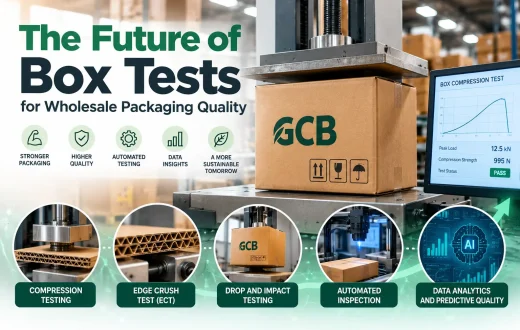
How Corrugated Board Protects Products During Delivery
A corrugated box isn’t just folded paper.
Its strength comes from its layered construction: linerboard forms the outer surfaces while a fluted paper medium sits between them.
That structure gives corrugated packaging a useful combination of rigidity, cushioning and compression resistance without making the carton excessively heavy.
Exactly how much protection you get depends on several factors:
- Board construction
- Paper grade
- Flute profile
- Box dimensions
- Product weight
- Stacking conditions
- Handling
- Transportation distance
- Exposure to moisture
That’s why choosing a carton simply because it “looks strong” isn’t enough.
And there’s another trap worth remembering.
The cheapest box isn’t necessarily the cheapest packaging solution.
If an inexpensive carton results in damaged products, additional protective materials, returns or replacements, the apparent saving can disappear very quickly.
Why Malaysian Businesses Choose Custom Corrugated Boxes
The best packaging decisions usually begin somewhere other than the packaging department.
They begin with the product.
Think about what happens to that product after it leaves your hands.
It may be picked from a warehouse shelf, packed by an employee, stacked with other cartons, loaded onto a lorry, transferred between logistics facilities and handled again before it reaches the customer.
Your box has to survive that journey.
Better Product Protection During Shipping
A box is effectively the product’s first line of defence.
During transportation, cartons can encounter:
- Compression
- Impact
- Vibration
- Repeated handling
- Stacking pressure
- Changes in storage conditions
The appropriate corrugated construction depends on the product and the journey.
A fragile product may need more than a stronger outer carton. It might also need an insert or internal cushioning system to prevent movement.
A heavy product may place greater demands on board strength and box construction.
The important thing is to think about the complete packaging system, rather than treating the carton as an isolated component.
Right-Sizing Boxes to Reduce Wasted Space
Oversized packaging has a habit of looking harmless.
A few extra centimetres here. A little more filler there.
Multiply that across hundreds or thousands of shipments, though, and the waste becomes much easier to see.
A correctly sized carton can reduce unnecessary material and create a tighter packing configuration.
For e-commerce businesses in particular, this matters because packaging is repeated over and over again.
A small improvement on one shipment can become a meaningful operational saving when multiplied across a large order volume.
Custom Printing for Stronger Brand Recognition
Then there is the part customers actually see.
Your box.
A plain carton does its job. A well-designed carton can do a little more.
Custom corrugated box printing can include:
- Company logos
- Brand colours
- Product information
- Website details
- QR codes
- Handling instructions
- Recycling information
- Customer messages
The packaging arrives before the customer sees the product itself.
That makes it part of the overall brand experience.
For consumer brands and e-commerce sellers, that first visual impression can be surprisingly valuable.
Packaging Designed Around Handling Requirements
There is no universal “best” corrugated box.
A box designed for T-shirts doesn’t necessarily make sense for electrical components.
A carton for a lightweight consumer product doesn’t necessarily need the construction required for a heavy industrial item.
Think about the application:
Lightweight products: efficient sizing may be the priority.
Fragile products: protection and internal stability become more important.
Heavy products: strength and compression resistance matter more.
Long-distance shipping: durability becomes increasingly important.
Retail or consumer packaging: appearance and printing may carry more weight.
The right box sits somewhere in the middle of these competing requirements.
How to Choose the Right Corrugated Box
If you’re preparing to request a quotation from a corrugated box supplier in Malaysia, start with five pieces of information:
Product + dimensions + weight + handling environment + quantity.
Those five details give a manufacturer a much better starting point than simply saying, “I need 5,000 boxes.”
Box Dimensions: Length, Width and Height
Start by measuring the product.
You’ll normally need its:
- Length
- Width
- Height
But don’t make the mistake of assuming the finished box should be exactly the same size.
If the product needs an insert, cushioning or protective material, that space has to be accounted for.
You also need to consider how the carton closes and folds.
A good box should hold the product securely without forcing it into place or leaving an unnecessarily large empty cavity.
Internal vs. External Box Dimensions
This sounds like a small technical detail.
It isn’t.
When speaking to a manufacturer, clarify whether your dimensions refer to the internal or external dimensions of the finished carton.
Also clarify how the manufacturer defines its finished dimensions.
A few centimetres of ambiguity before production can become a very expensive surprise afterward.
Best practice: put the measurement convention directly into your quotation request.
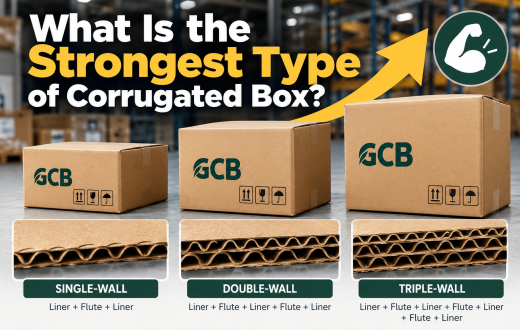
Single-Wall vs. Double-Wall Corrugated Boxes
One of the first material decisions you’ll encounter is whether you need single-wall or double-wall corrugated board.
Neither is automatically superior.
They simply serve different requirements.
Single-Wall Corrugated Boxes
Single-wall corrugated board generally contains:
liner + flute + liner
It’s widely used for general packaging where moderate protection is sufficient.
Common applications include:
- Apparel
- General e-commerce products
- Consumer goods
- Lightweight products
- General shipping applications
For many everyday products, single-wall construction may provide more than enough protection.
Double-Wall Corrugated Boxes
Double-wall construction contains two fluted layers with additional linerboard.
The extra layer can provide greater rigidity and strength.
It may be worth considering for:
- Heavy products
- Fragile products
- Industrial components
- Larger cartons
- Products exposed to significant stacking pressure
- More demanding transportation conditions
But stronger isn’t automatically smarter.
If your product is lightweight and doesn’t require heavy-duty protection, paying for substantially stronger board may simply increase your packaging cost without delivering meaningful additional value.
The objective is appropriate strength, not maximum strength.
Understanding Corrugated Flute Types
Inside the corrugated board is the fluted medium—the structured paper layer that helps give the board its strength and cushioning characteristics.
Common flute categories include A, B, C, E and F.
Their characteristics differ in areas such as:
- Thickness
- Cushioning
- Rigidity
- Compression resistance
- Surface characteristics
- Printing suitability
Availability and exact specifications can vary between manufacturers.
Larger Flutes
Larger flute profiles can offer greater cushioning and structural properties.
They may be useful when product protection and compression resistance are important.
Smaller Flutes
Smaller flute profiles create thinner board and can provide a relatively smooth surface.
They may be attractive where:
- Packaging presentation matters
- Printing quality is important
- The product is lightweight
- Space efficiency matters
How Should You Choose a Flute?
Don’t get trapped in the terminology.
You don’t necessarily need to walk into a supplier’s factory knowing whether you want B-flute, C-flute or E-flute.
A better starting point is:
What does the product need the box to do?
Tell the manufacturer the product’s weight, dimensions, fragility and transportation requirements.
Then let the technical conversation determine the appropriate board construction.
Custom Corrugated Box Printing Options
Your packaging has two jobs.
It needs to protect the product.
And, increasingly, it needs to communicate something about the business behind it.
One-Colour vs. Multi-Colour Printing
Some businesses need nothing more than a logo and a few handling instructions.
Others want packaging that looks unmistakably like their brand.
Depending on the manufacturer’s capabilities, printing can range from relatively simple designs to more elaborate graphics.
Before adding complexity, ask yourself whether it contributes something meaningful.
More colours and more finishing may look impressive—but if the packaging is primarily used for industrial transportation, a simple and highly recognisable design may be the better investment.
Logo, Branding and Product Information
A printed carton can carry surprisingly useful information.
For example:
- Brand name
- Logo
- Product name
- SKU
- Website
- QR code
- Handling instructions
- Fragile warnings
- Orientation arrows
- Contact information
Good packaging doesn’t force the customer to choose between beauty and usefulness.
It makes the two work together.
Custom Packaging as a Brand Experience
Imagine two parcels arriving at your doorstep.
The first is an oversized brown carton with a product rattling around somewhere inside.
The second fits the product neatly, carries the brand’s identity and looks as though someone actually thought about the experience.
Same product.
Different feeling.
That distinction matters.
For e-commerce and consumer brands, the carton can become part of the customer’s first physical interaction with the company.
How Much Do Custom Corrugated Boxes Cost in Malaysia?
This is usually where the conversation gets interesting.
Because there isn’t one universal custom corrugated box price in Malaysia.
The final cost depends on the specification.
Key variables include:
- Box dimensions
- Board construction
- Paper grade
- Flute
- Printing
- Die-cutting
- Inserts
- Quantity
- Production complexity
- Delivery requirements
What Determines the Price Per Box?
Consider two hypothetical orders.
Order A
Small carton, single-wall construction, no printing and a large production quantity.
Order B
Large carton, double-wall construction, multi-colour printing, custom die-cutting and a relatively small order.
The two products may both be described as “corrugated boxes.”
Their manufacturing costs can be dramatically different.
That’s why a meaningful quotation needs to compare the complete specification, not simply the number beside “price per box.”
MOQ and Volume Pricing
MOQ stands for Minimum Order Quantity.
Manufacturers may have MOQs because even a relatively small production run can involve:
- Machine setup
- Printing setup
- Material preparation
- Cutting
- Production scheduling
- Quality control
Higher volumes can sometimes improve unit economics because setup costs are spread across more cartons.
If you’re a business with recurring packaging requirements, it is worth asking about repeat orders or scheduled production rather than treating every purchase as a completely new project.
Why Cheap Boxes Can Create Higher Total Costs
Here’s a simple thought experiment.
Suppose one supplier offers a box for RM0.20 less.
That sounds like a win.
But imagine that the cheaper carton contributes to a small increase in product damage. Suddenly you’re dealing with replacements, returns, customer complaints, extra packing materials and lost time.
The original RM0.20 saving doesn’t look quite as impressive anymore.
That’s why packaging decisions should consider:
Box cost + shipping efficiency + product protection + handling + damage risk + operational cost.
You’re not really buying cardboard.
You’re buying a packaging outcome.
Finding a Custom Corrugated Box Manufacturer in Malaysia
Choosing the right box is only half the job.
The other half is finding a supplier capable of producing it consistently.
A good supplier should be able to discuss more than price.
Look for evidence of:
- Manufacturing capability
- Consistent quality
- Material knowledge
- Production capacity
- Lead-time reliability
- Quality-control procedures
- Sample development
- Repeat-order capability
- Delivery capability
Manufacturer vs. Packaging Reseller
Not every packaging company manufactures every product in-house.
Some businesses operate as resellers or coordinate production through manufacturing partners.
That isn’t automatically a problem.
The important thing is understanding who is actually responsible for producing your packaging and how quality is controlled.
For a simple, low-volume carton, this distinction may not matter much.
For a high-volume packaging programme, it can matter considerably.
Ask about:
- Manufacturing location
- Production capacity
- Quality control
- Lead time
- Customisation capability
- Repeat-order consistency
Questions to Ask Before Requesting a Quotation
Before sending a supplier a message that simply says “custom box price?”, prepare a better brief.
Ask:
Can you produce my required dimensions?
Which board construction would you recommend?
What flute would suit my product?
Can you provide a physical sample?
What is your MOQ?
How long does production take?
What printing options are available?
How do you control print and board quality?
Can you handle repeat orders?
What happens if the delivered cartons don’t meet the agreed specification?
The quality of the questions you ask often determines the quality of the conversation you have.
Custom Corrugated Boxes for Different Malaysian Industries
Packaging requirements change dramatically from one industry to another.
E-Commerce Businesses
For online sellers, the priorities often include:
- Correct sizing
- Product protection
- Courier efficiency
- Branding
- Easy repeat ordering
When packaging is used hundreds or thousands of times, even small improvements can have a noticeable effect on total operating costs.
Electronics and Electrical Products
Electronics may require protection from:
- Impact
- Compression
- Movement
- Moisture
- Repeated handling
The outer carton is only one part of the solution.
Depending on the product, internal inserts or cushioning may be equally important.
Food and Consumer Products
Consumer packaging often has to balance:
- Product protection
- Presentation
- Storage requirements
- Handling
- Branding
Where food is involved, remember that the corrugated shipping carton and the product’s primary food-contact packaging serve different purposes and should be treated accordingly.
Industrial Components
Industrial products can be unforgiving.
They may be:
- Heavy
- Large
- Irregularly shaped
- Sharp-edged
- Difficult to handle
- Subject to stacking pressure
These applications may require stronger corrugated construction and carefully designed internal protection.
Furniture and Larger Products
Large products create a different set of challenges.
The carton needs to survive handling while remaining practical to move and store.
Consider:
- Structural strength
- Panel dimensions
- Compression
- Handling
- Storage
- Transportation
- Palletisation
For large products, packaging becomes part of the logistics system itself.
The Custom Corrugated Box Buyer Checklist
Before approving a production order, run through the details one more time.
Product
- What exactly are you packaging?
- What does it weigh?
- Is it fragile?
- Does it move around inside the box?
- Does it require inserts or cushioning?
Dimensions
- Length?
- Width?
- Height?
- Internal or external dimensions?
- Required clearance?
Material
- Single-wall or double-wall?
- Which flute?
- What board strength?
- Has the supplier recommended an alternative?
Printing
- No printing?
- One-colour?
- Multi-colour?
- Logo?
- Product information?
- Handling instructions?
Quantity
- Initial order quantity?
- Monthly requirement?
- Annual requirement?
- MOQ?
- Repeat-order frequency?
Logistics
- Delivery location?
- Required delivery date?
- Storage conditions?
- Palletisation requirements?
Quality
- Can you approve a physical sample?
- What quality-control process is used?
- Is the specification documented?
- What happens if the finished boxes don’t meet the agreed requirements?
Once these details are clear, “I need some cardboard boxes” becomes something much more useful:
a proper packaging specification.
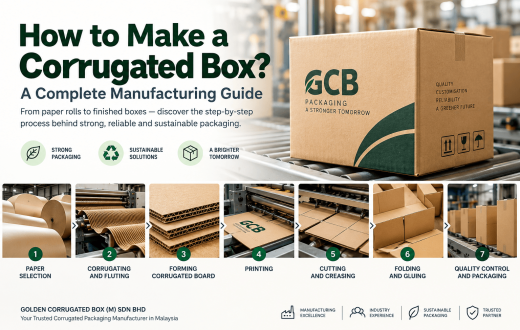
How to Order Custom Corrugated Boxes in Malaysia
The process can be surprisingly straightforward when the requirements are clear.
Step 1 — Start With the Product
Don’t begin with the box.
Begin with what goes inside it.
Record:
- Product dimensions
- Product weight
- Fragility
- Quantity
- Shipping environment
Step 2 — Define the Box Specification
Next, establish:
- Finished dimensions
- Board construction
- Flute
- Printing
- Closure
- Inserts
If you’re unsure about the material, say so.
A good manufacturer should be able to recommend an appropriate construction based on the product.
Step 3 — Request a Quotation
Give the supplier enough information to quote accurately.
A quotation based on incomplete specifications can be difficult to compare with another supplier’s quotation.
Step 4 — Request a Sample
This step is easy to skip.
It is also one of the most useful.
A physical sample lets you check things that look perfectly acceptable on paper:
- Product fit
- Clearance
- Folding
- Closure
- Printing
- Structural feel
- Internal protection
If you’re placing a large order, a sample is cheap insurance against an expensive mistake.
Step 5 — Approve the Final Specification
Before production begins, confirm the final:
dimensions + material + printing + quantity + delivery requirements.
Don’t rely on a long WhatsApp conversation and memory.
Get the specification clearly documented.
Step 6 — Production and Quality Control
The manufacturer produces the cartons according to the approved specification.
For recurring orders, consistency becomes especially important.
A carton that works perfectly today should not mysteriously change dimensions or construction on the next production run.
Step 7 — Delivery and Repeat Orders
Once you’ve found a specification that works, keep it documented.
That makes repeat ordering considerably easier and reduces the chance of specification drift.
What Should You Send a Malaysian Corrugated Box Supplier?
Want a faster quotation? Can contact Golden Corrugated Box to get it.
Don’t make the supplier guess.
Send something like this:
Product:
Product dimensions:
Product weight:
Required box dimensions:
Quantity:
Board preference:
Printing requirement:
Special requirements:
Delivery location:
Required delivery date:
And if you have no idea what board or flute you need, simply say:
“Please recommend the appropriate corrugated board specification based on my product and shipping requirements.”
That’s a perfectly reasonable request.
You don’t have to become a packaging engineer before you can buy packaging.
Frequently Asked Questions
What exactly is a custom corrugated box?
It’s a corrugated carton manufactured around your requirements rather than selected from a standard stock size.
That can include custom dimensions, board construction, flute, printing, die-cutting, inserts and other specifications.
Are custom corrugated boxes more expensive than standard boxes?
Not necessarily.
The unit price depends on the material, dimensions, printing, quantity and manufacturing requirements.
A custom carton can also reduce other costs by reducing wasted space, unnecessary filler, shipping inefficiency or product damage.
So the more useful question is not simply “How much does the box cost?”
It’s “What does this packaging cost my business overall?”
Should I use single-wall or double-wall corrugated boxes?
It depends on the product.
Single-wall construction may be perfectly suitable for lightweight, general-purpose applications.
Double-wall construction can be more appropriate when additional strength and rigidity are required.
The product’s weight, dimensions, stacking conditions and transportation environment should guide the decision.
What information does a supplier need for a quotation?
At minimum, provide the product dimensions, product weight, desired box dimensions, quantity, printing requirements and delivery location.
If you don’t know the appropriate board construction or flute, ask the supplier to recommend one based on your application.
What’s the MOQ for custom corrugated boxes in Malaysia?
There isn’t one universal MOQ.
It varies according to the manufacturer, box dimensions, material, printing and production requirements.
Always confirm the MOQ before finalising your order.
Can I print my company logo on a corrugated box?
Yes.
Depending on the manufacturer’s capabilities, corrugated packaging can be printed with logos, brand graphics, product information, handling instructions and other artwork.
The available printing process and finish will depend on the specific supplier and carton specification.
How do I know what box size I need?
Start by measuring the product’s length, width and height.
Then account for any protective material, inserts and the space needed for the carton to close properly.
Also clarify whether your measurements are internal or external dimensions when speaking to the manufacturer.
Do I really need a sample before ordering?
If you’re ordering a significant quantity, getting a sample is a sensible step.
It gives you a chance to discover problems with fit, dimensions, closure, printing or protection before those problems are multiplied across a full production run.
How do I choose a custom corrugated box supplier in Malaysia?
Look beyond the lowest quotation.
Consider manufacturing capability, quality control, material knowledge, production capacity, lead time, sample availability and the supplier’s ability to maintain consistent specifications for repeat orders.
The right supplier should be able to help you make a better packaging decision—not simply tell you the price.